Outfit Ideas for Work: Repeatable Formulas for Every Office Dress Code
Getting dressed for the office should not be a daily design project. The most reliable outfit ideas for work are not single outfits at all — they are formulas: a few trusted pieces combined in the same order, with one or two slots swapped for the day's formality level, the weather, and the calendar. This guide lays out repeatable formulas for every common office dress code, then shows you a three-minute fit, color, and polish check you can run before you walk out the door — by hand, or with an AI outfit analysis.
First, Find Your Office's Formality Level
Workplace dress codes sit on a spectrum. One widely used framework describes five levels — casual, smart casual, business casual, business professional, and business formal — each with its own expectations for tops, bottoms, and shoes (the PennWest Career Center guide to professional attire walks through all five levels with garment examples). Before you build a formula rotation, decode which level your office actually runs:
- Read the room. For a few days, note what the people you meet with wear: your manager, your team, and the client-facing staff one or two levels above you.
- Check the handbook and the calendar. Many companies publish a dress-code policy and tighten it for client visits, presentations, and off-site events.
- Note the exceptions. "Business casual" can include jeans at a startup and never include them at a law firm. When in doubt, dress one level up — you can always take the blazer off.
The Anatomy of a Repeatable Work Outfit
Every formula in this guide fills the same four slots:
- Base layer — the shirt, blouse, knit, or tee closest to your body.
- Structure layer — blazer, cardigan, overshirt, or suit jacket: the piece that sets the formality level.
- Bottom — trousers, chinos, skirt, or jeans (when your office allows them).
- Shoes — the second-biggest formality signal after the structure layer.
Two rules make the system work. First, keep each outfit to two or three color families, with one neutral anchor (navy, charcoal, black, or beige) doing most of the work. Second, change only one slot at a time: the same trousers and shoes move from business casual to smart casual by swapping a button-down for a fine knit, or by adding a blazer rather than replacing everything. That one-slot rule is what makes these outfit ideas for work genuinely repeatable on a Monday-to-Friday schedule.
Business Professional Formulas
Finance, law, government, and other conservative offices expect suits, blazers over tailored bottoms, and covered shoulders.
- The matched suit. Navy or charcoal suit with a white or light-blue shirt or blouse, dark leather oxfords or low heels, and a belt that matches the shoes. This is the default for client meetings and formal reviews.
- The suit jacket with a knit shell. A tailored two-piece suit worn with a fine-gauge knit instead of a shirt reads modern while staying professional — a good choice where business professional allows a slightly softer look.
- The covered-shoulder dress plus blazer. A midi or sheath dress with sleeves or covered shoulders, layered under a structured blazer, with closed-toe flats or low heels.
Repeatability tips: buy two suits and rotate them, replace shirts or shells in multiples, and keep one darker "formal event" outfit for occasions that call for business formal.
Business Casual Formulas
Business casual is the most common office dress code and the easiest to overthink. The working definition is simple: professional but relaxed — a blazer is not required.
- Blazer + knit + tailored trousers. A blazer over a fine knit with worsted or ponte trousers and loafers. This is the workhorse formula: polished enough for meetings, comfortable enough for a desk day.
- Button-down + chinos + loafers. A white or muted-stripe oxford shirt, khaki or navy chinos, leather loafers, belt matching the shoes.
- Sweater over a collared shirt + trousers. A crewneck or V-neck sweater layered over a collared shirt looks intentionally put together, and the collar keeps it office-appropriate.
- Pencil or midi skirt + blouse. A structured skirt with a blouse or knit top, flats or low heels; add a cardigan or blazer on cooler days or when clients are in.
- Polo + chinos + clean low-profile sneakers. A well-fitted polo with chinos and clean leather or canvas low-profile sneakers works in relaxed offices without sliding into weekend territory.
- Corduroy or wool trousers + cardigan over a shirt. A textured alternative to chinos that stays safely inside the code.
Leave out at this level until you confirm otherwise: jeans, shorts, athletic wear, ripped or heavily distressed pieces, and worn-out or open-toed shoes.
Smart Casual Formulas
Smart casual sits between casual and business casual: elevated, a little more personal, still clean and intentional. It fits informal offices, interviews at relaxed companies, and hybrid days.
- Unstructured blazer + plain tee + dark denim. A soft-shoulder blazer over a plain tee with dark, clean jeans and loafers or derbies.
- Overshirt or chore jacket + knit + chinos. The overshirt does the structuring work of a blazer with a more casual silhouette.
- Camp-collar shirt + tailored trousers. An open camp-collar shirt with trousers and clean sneakers — an easy warm-weather formula.
- Knit polo + chinos + derbies. A heavier knit polo reads more deliberate than a classic polo and pairs naturally with derbies.
- Midi skirt + knit top + flats or clean sneakers. A relaxed, covered silhouette that still looks pulled together.
Smart casual tolerates more color and pattern than business casual — but keep the two-or-three-color rule, and skip anything ripped, sheer, or gym-adjacent.
Casual Friday and Creative-Office Formulas
If your office runs a relaxed code or a visible casual Friday, aim one notch above the floor — you never know when a client will walk in.
- Dark denim + chambray or oxford shirt + clean sneakers. Untucked but neat, with the shirt pressed.
- Plain tee + chore jacket + chinos. A well-cut tee under an overshirt with chinos reads deliberate rather than sloppy.
- Knitwear + jeans + leather boots or loafers. A fine-gauge sweater with dark denim is the easiest cold-weather casual formula.
- Denim + knit polo + casual blazer. The blazer keeps you meeting-ready even on a casual day.
Even at the most relaxed offices, keep ripped denim, athletic wear, flip-flops, and gym shorts at home — those read as "off," not "casual."
The Three-Minute Pre-Work Check: Fit, Color, Polish
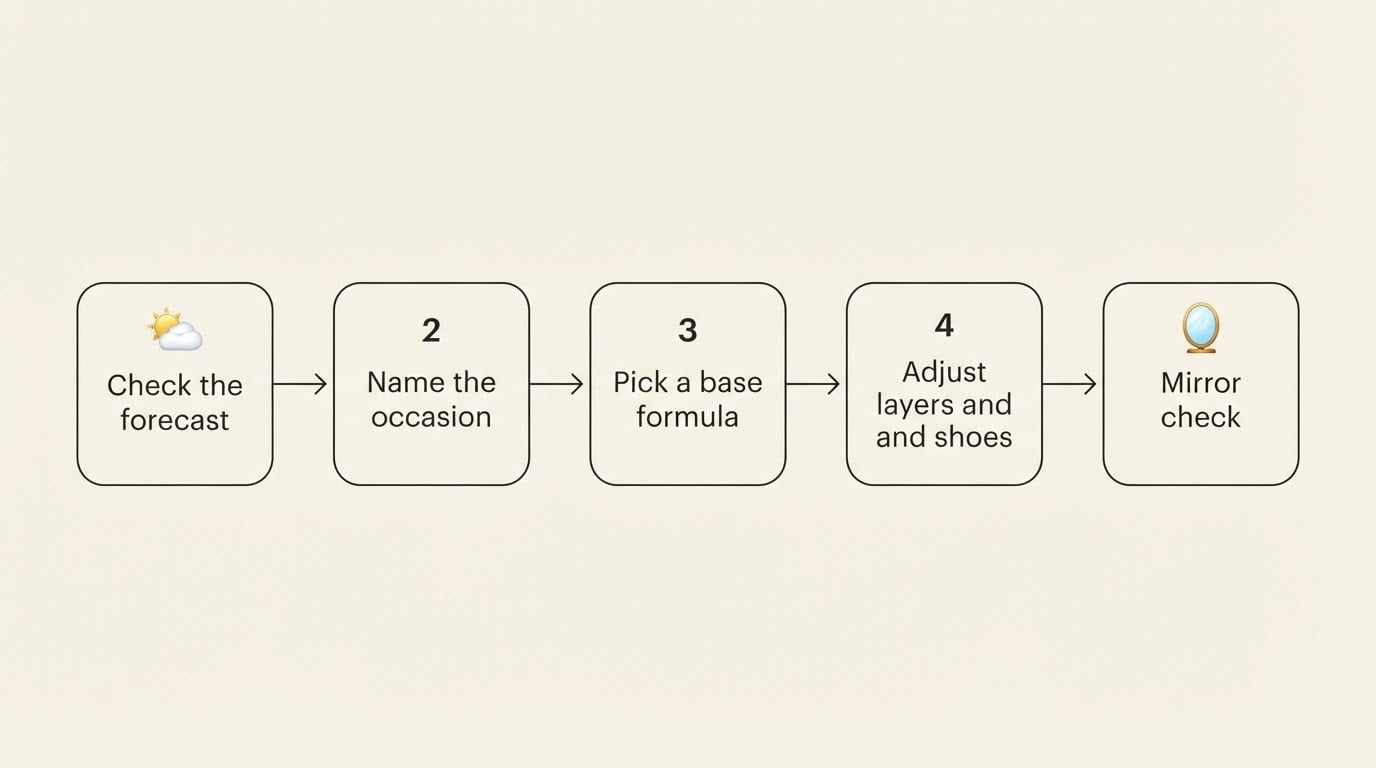
Formulas get you dressed; the check gets you out the door with confidence. Before you leave, stand in front of a full-length mirror and run three passes:
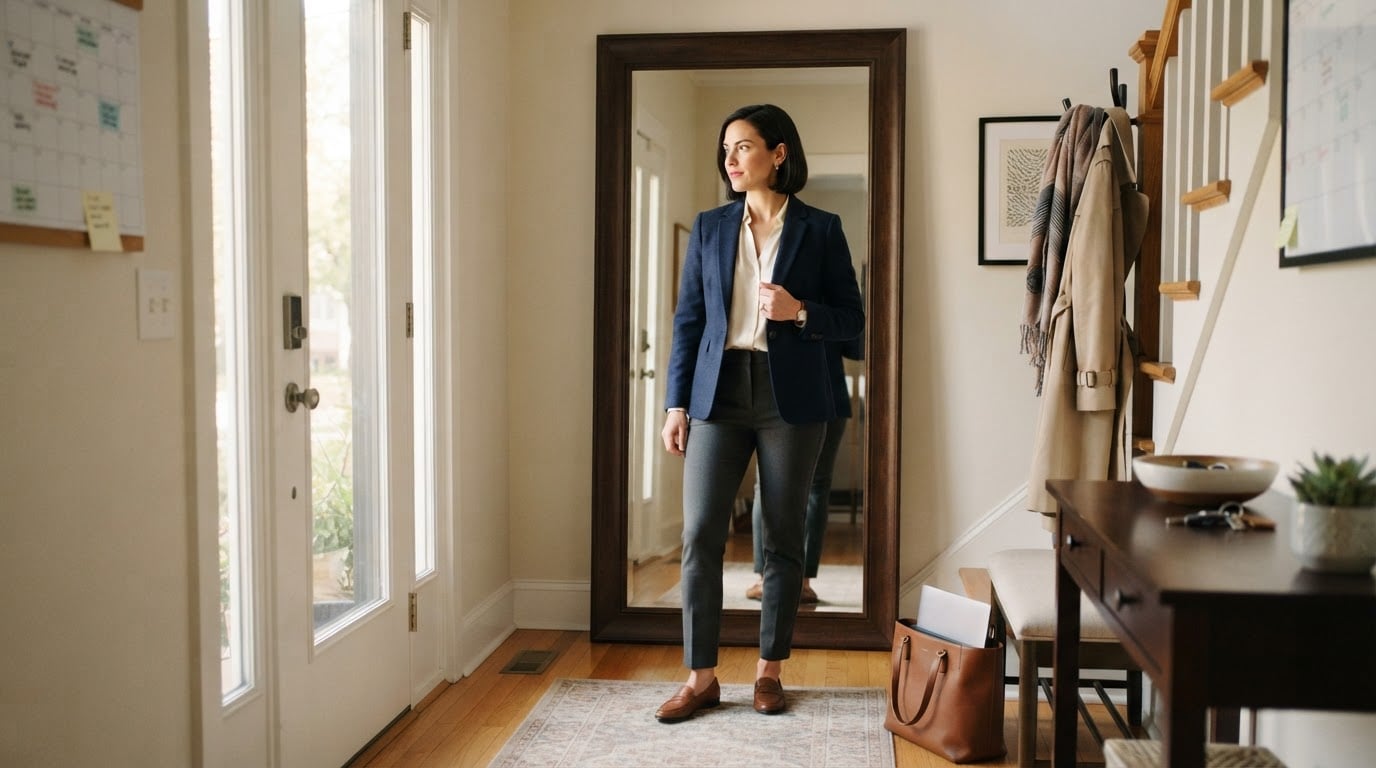
- Fit. Jacket shoulders lie flat and the button closes without pulling. Trouser hems sit at the shoe without dragging or pooling. Nothing wrinkles, gaps, or strains when you sit down — test it.
- Color. Confirm the outfit uses two or three families and that the contrast looks intentional under office light, not just bedroom light.
- Polish. Scan for wrinkles, lint, loose threads, scuffed shoes, and missing buttons. Steam or iron anything creased, and retire worn belts and frayed collars — polish is a bigger formality signal than price.
If you want a genuinely objective second opinion before the workday starts, an AI outfit analysis can run the same checks from a single photo. One example is Dress Better: its AI analysis evaluates a full-body outfit photo for color coordination, fit proportions, material choices, and occasion appropriateness, with no height, weight, or style-preference questionnaire. Dress Better describes its approach as an "outfit linter" — keeping what already works and flagging only the few small conflicts worth adjusting. Take or choose a photo of the day's outfit, and the analysis tells you what is working and which small adjustments are worth making before the workday begins. It is not a replacement for your own judgment — it is a fast, specific second opinion for the mornings when the mirror is not enough.
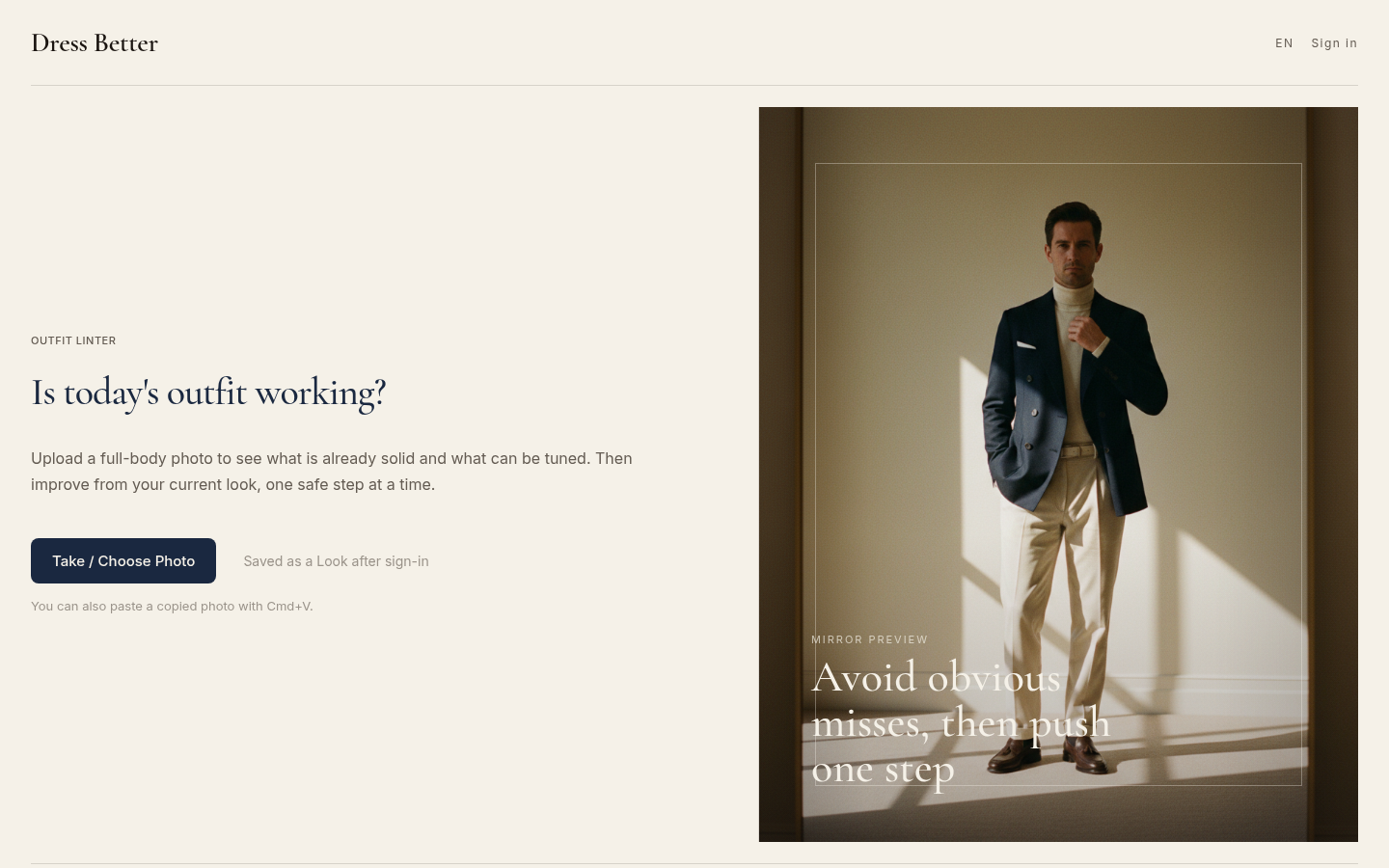
Desktop homepage first screen showing Outfit Linter eyebrow, "Is today's outfit working?" heading, Take/Choose Photo CTA button, and menswear editorial mirror preview image. Englis
Then walk out the door. The real goal of these outfit ideas for work is not a bigger wardrobe — it is a shorter decision, every morning.