What to Wear Today: The 5-Minute Formula for Any Weather and Occasion
Deciding what to wear does not have to be a daily argument with your closet. The fastest way to answer "what to wear" is to run a short formula: check the weather, name the occasion, pick a base outfit, then adjust the layers and shoes. This guide gives you ready-to-use outfit formulas for hot, cold, and rainy days, plus simple recipes for work, school, weekends, and social plans, with options for men and women, so you can get dressed with confidence in about five minutes.
The 5-Minute Formula
Run the same five steps in the same order every morning, and the daily question mostly answers itself.
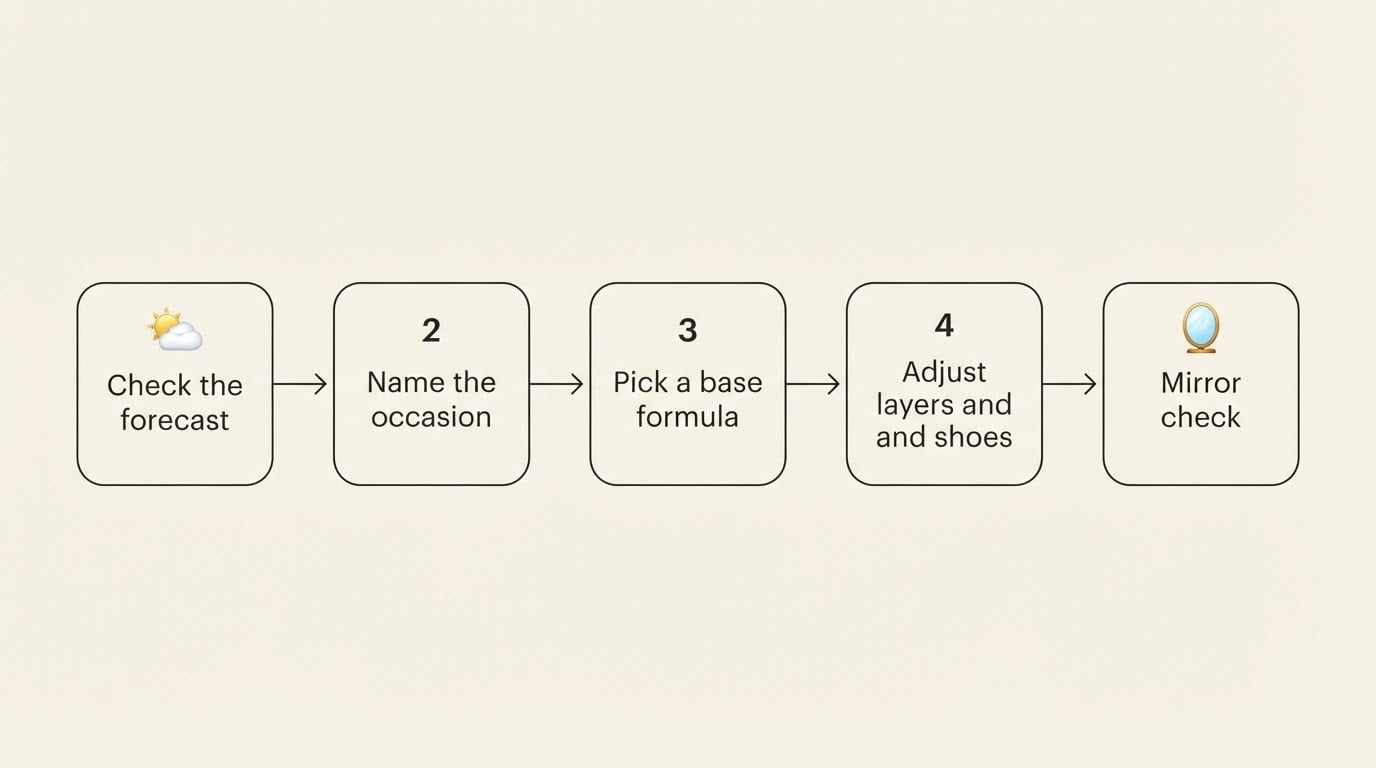
- Check the real forecast. Look at the high and the low temperature, not just the icon on your phone. Note the rain chance and the wind, because both change what your outer layer and shoes need to do.
- Name the occasion and its dress code. A job interview, a casual office, a lecture day, and a first date all have different unspoken rules. When you are unsure, pick the more specific code from the invitation, the company page, or the venue.
- Pick a base formula. Use the weather and occasion sections below to choose one complete outfit instead of assembling pieces one by one.
- Adjust for the temperature swing. Add or remove layers so you are comfortable at the coldest moment of your commute and the warmest moment of your day indoors.
- Do a 30-second mirror check. Sit, bend, walk a few steps, and look at yourself from the side. If nothing pulls, gapes, or feels tight, you are ready.
You are done when every piece on your body has a reason: the outfit matches the occasion, fits the temperature, and lets you move, sit, and walk comfortably. If you cannot explain one item, swap it before you leave.
What to Wear by Weather
Temperature and precipitation decide more than any trend does. When you plan around the day's real conditions first, the outfit almost builds itself.
Hot and humid days
When it is hot and sticky, your goal is airflow and sweat control, not coverage. Choose loose silhouettes, breathable fabrics such as cotton, linen, and lightweight knits, and open shoes or low-profile sneakers that let your feet breathe. Skip heavy denim, synthetic suits, and tight collars; they trap heat and show dampness quickly.
- For men: a linen or cotton short-sleeve shirt with a relaxed chino or lightweight trouser, or a plain crew-neck tee with tailored shorts. Add a belt and clean low-top sneakers or leather loafers, and carry a light overshirt in case the office is cold.
- For women: a cotton or linen midi dress with flat sandals, or a loose blouse tucked into wide-leg trousers with a low block heel. A silk- or cotton-blend wrap dress is a reliable one-piece answer for hot days that still look polished.
When the heat is extreme, the smarter move is fewer, lighter pieces rather than fewer clothes: choose one breathable layer you can wash and wear again, and prioritize the fabric over the fit.
Cold and windy days
The three-layer system is the fastest way to stay warm without looking bulky: a base layer that sits against the skin, a mid layer that traps warmth, and an outer layer that stops wind and moisture. Each layer should do one job, and each should be removable when you step indoors.
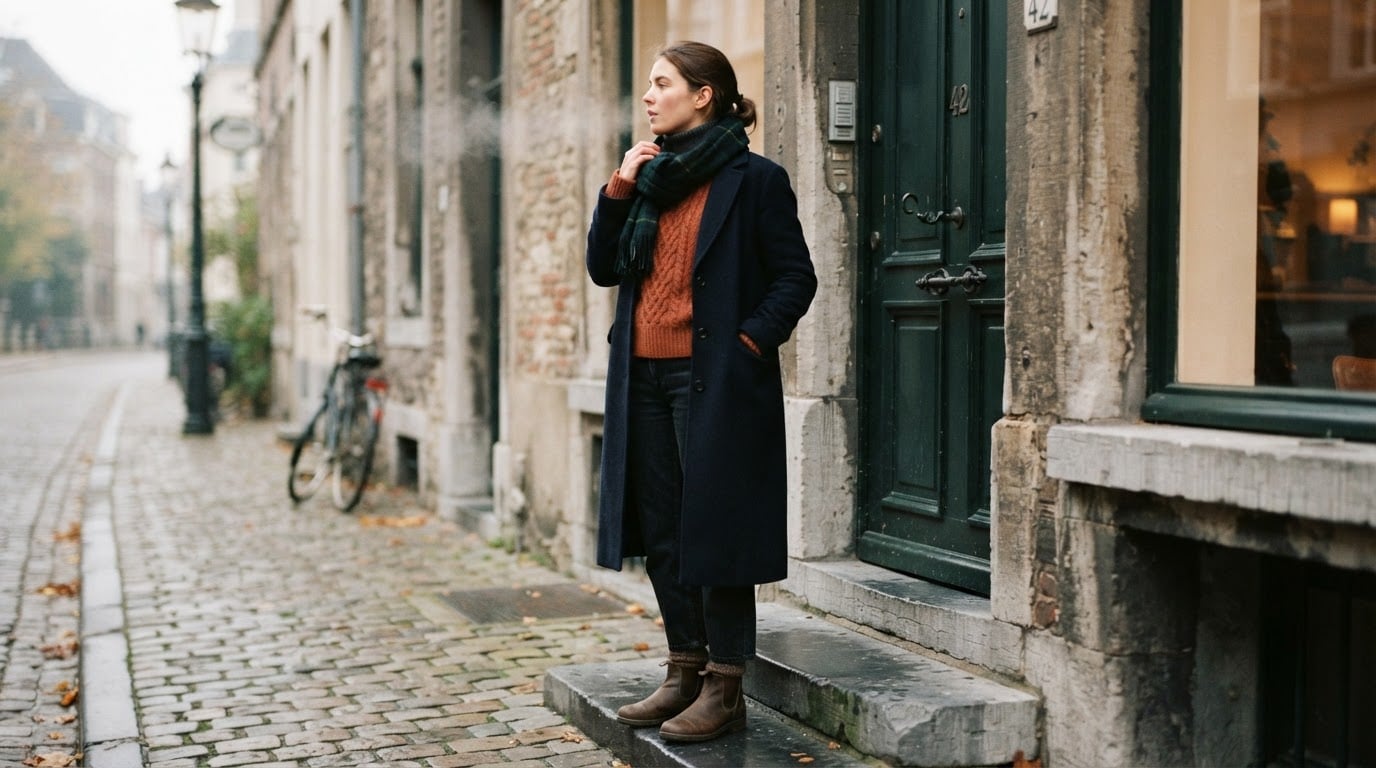
- For men: a merino or cotton base tee, a chunky knit or flannel mid layer, and a wool or technical parka on top. Dark tapered trousers or straight-leg denim, wool socks, and waterproof boots complete the cold-day formula.
- For women: a thermal or ribbed-knit base, a turtleneck or cashmere-blend sweater, and a long wool coat or puffer. Add straight-leg trousers or thick tights with a skirt, ankle boots, and a scarf that also protects your neck from wind.
A common cold-day mistake is dressing for the outdoor temperature only. Offices, trains, and malls are often warm, so build the outfit around layers you can remove, and make the outermost layer the piece that handles the actual weather.
Rainy and damp days
On rainy days, protect the two things that ruin an outfit fastest: your shoes and your outer layer. Wear a water-resistant shell or a coat with a hood, choose shoes with grip and water resistance, and avoid light suede and unlined fabrics that stain when wet.
- For men: a technical shell over a knit polo or Oxford shirt, dark denim or water-resistant chinos, and rubber-soled boots or leather sneakers you do not mind getting damp.
- For women: a trench or waterproof parka over a knit dress or blouse-and-trouser set, with ankle boots or lug-sole sneakers. If your pants are long, cuff them once or choose a cropped cut so hems stay dry.
Carry a spare pair of socks in your bag on heavy-rain days. Wet socks are the detail that turns a manageable commute into a miserable one, and a dry pair fixes most of the damage.
Mild and changeable days
When the morning is cool and the afternoon is warm, treat the day as two different weather reports. Wear a light base with a removable mid layer, such as a shirt under a knit cardigan or a tee under an unlined blazer, and pick shoes that work for both halves of the day. A cotton overshirt or a thin scarf in your bag gives you a third option without committing to a heavy coat.
What to Wear by Occasion
Once the weather is handled, the occasion sets the dress code. This quick-pick table covers the most common situations; detailed formulas follow.
Occasion | Dress code in one word | Easiest reliable formula |
|---|---|---|
Office or hybrid work | Smart | Blazer or knit over a collared shirt, tailored trousers, leather shoes |
School or campus | Comfortable | Clean knit or shirt, well-fitting jeans or chinos, sneakers |
Weekends and errands | Relaxed | Tee or overshirt, straight denim, easy shoes |
Date or evening plans | Polished | Elevated version of your daily style, darker tones, statement shoe |
Work and hybrid office
If you do not know the office dress code, start with smart casual and refine it after your first week: a collared shirt or fine knit, trousers that are not jeans, and shoes that are not sneakers. Business casual adds a blazer or a sheath dress; formal offices swap the knit for a full suit. Keep one layer you can take off, because office temperatures vary wildly by floor and season.
- For men: an Oxford or chambray shirt with tailored chinos or wool trousers and loafers, with a knit blazer for meetings.
- For women: a silk- or cotton-blend blouse with straight-leg trousers and a low heel, or a structured midi dress with a blazer for presentation days.
School and campus
Campus outfits have to survive walking, sitting on the floor, changing weather, and backpacks. Choose pieces that look intentional but tolerate movement: dark denim or chinos that do not show wear, knitwear or shirts with a clean collar, and sneakers that are actually comfortable for a full day of walking. Save statement pieces for evenings, and keep a layer in your bag for air-conditioned classrooms.
- For men: a plain crew-neck sweater or flannel shirt, straight-leg jeans, and clean white or neutral sneakers.
- For women: a relaxed button-down or fitted knit with high-waisted denim and chunky sneakers, or a casual midi skirt with a tee tucked in and a denim jacket for temperature swings.
Weekend errands and travel
Weekend dressing should look intentional without trying hard. The formula is one relaxed top, one well-fitting bottom, and one pair of shoes that can handle hours of standing. For travel days, add comfort-first rules: layers for the plane, slip-on shoes through security, and wrinkle-resistant fabrics such as knits and blends so you arrive presentable.
- For men: an overshirt or polo, straight-leg denim or joggers cut like trousers, and low-top sneakers or clean leather trainers.
- For women: a ribbed knit or boxy tee with wide-leg trousers or relaxed denim and flat boots, or a jersey midi dress with sneakers for the easiest travel outfit there is.
Dates and social plans
For social plans, the reliable upgrade is not a new outfit but polish: choose the elevated version of what you already wear, keep colors darker or more deliberate, and let one piece carry the look. That usually means a better shoe, a fitted layer, or a single accessory, never a costume.
- For men: a dark fine-knit sweater or a crisp shirt under a jacket, dark trousers, and leather boots or loafers.
- For women: a satin or knit slip dress with heeled boots, or tailored trousers with a silk top and a structured bag. If the plan is casual, swap the heel for a clean sneaker and keep the top half polished.
Outfit Mistakes That Can Ruin an Otherwise Good Day
Even a strong outfit fails when one detail fights the day. Watch for these six recurring problems:
- Dressing for the look instead of the day. A great outfit is the wrong outfit if it ignores rain, heat, or a long walk. Weather beats style every time.
- Guessing the dress code. When the occasion is ambiguous, the cost of being underdressed is higher than the cost of asking or checking the venue. Clarify first, then dress.
- Ignoring shoes. People notice shoes more than any other item, and shoes also decide whether your feet survive the day. Treat them as the anchor of the outfit, not an afterthought.
- Judging warmth by thickness. A thick cotton sweater loses to a thin wool or merino layer, and a bulky coat underperforms a proper three-layer system. Fabric and structure matter more than weight.
- Forgetting the evening drop. A sunny afternoon can turn into a cold evening. Check the low temperature and carry the layer that bridges the gap.
- Testing new pieces on important days. Never debut untried shoes, stiff jeans, or an experimental silhouette on a day that matters. Test new items on ordinary days first.
Quick Answers to Common Follow-Ups
- What to wear when it is hot outside but cold indoors? Dress for the outdoor heat in breathable layers and carry one warm piece, such as a knit cardigan, a light overshirt, or a packable layer you can put on at your desk.
- What to wear when there is no dress code? Default to smart casual: a collared shirt or fine knit, trousers that are not jeans, and clean non-sneaker shoes. It is rarely wrong and easy to dress up or down.
- What if I do not own the exact pieces in a formula? Substitutions work when the role is the same. A knit can replace a blazer, chinos can replace wool trousers, and clean leather trainers can stand in for loafers. Keep the occasion and weather honest, and the specific garment matters less.
The 60-Second Final Checklist
Run this before you leave, and stop second-guessing:
- Forecast checked, including the low temperature and rain.
- Occasion and dress code are clear.
- Base outfit picked from one formula, not assembled piece by piece.
- Layers handle both the coldest and warmest moments of your day.
- Shoes are clean, comfortable, and right for the weather.
- Mirror check passed: nothing pulls, gapes, or needs adjusting.
When in doubt, choose the outfit that is appropriate for the occasion, comfortable for the day, and ready for the weather. That combination rarely steers you wrong, and it takes the daily "what to wear" question from a source of stress to a five-minute routine.